<body><script type="text/javascript"> function setAttributeOnload(object, attribute, val) { if(window.addEventListener) { window.addEventListener('load', function(){ object[attribute] = val; }, false); } else { window.attachEvent('onload', function(){ object[attribute] = val; }); } } </script> <div id="navbar-iframe-container"></div> <script type="text/javascript" src="https://apis.google.com/js/platform.js"></script> <script type="text/javascript"> gapi.load("gapi.iframes:gapi.iframes.style.bubble", function() { if (gapi.iframes && gapi.iframes.getContext) { gapi.iframes.getContext().openChild({ url: 'https://www.blogger.com/navbar/4053797?origin\x3dhttp://absentofi.blogspot.com', where: document.getElementById("navbar-iframe-container"), id: "navbar-iframe" }); } }); </script>

Big Mind book Thursday, March 22, 2007 |


I received this via email, and since it seems to be an open invitation thought I would post it here. Seems like a great chance for those interested in supporting the publishing of this book, and the Big Mind process in general.

Dear Sangha and Supporters,

As you may already know, we're offering a limited hardcover edition of my forthcoming book, Big Mind / Big Heart: Finding Your Way. These specially printed and bound books will be signed and numbered, and will only be available to those who order them before publication.

We are wishing to publish it ourselves, as the new Big Mind Publishing company. In this way, we will maintain full control of the editorial content and appearance of the book. My experience in having my work issued by other publishing companies has been that I have had to compromise my intent and style to please the publishers. In order to avoid this we are planning to raise enough capital for the printing, advertising and promotion, and other costs.

Our goal is to sell at least 300 copies to finance this project. As of right now we have sold just about 100 copies. So that we don't have to go to an outside publisher, I would like to encourage you, if you haven't already ordered one or more copies, to order now; or if you have already ordered a copy, to think about ordering additional copies as gifts.

The original deadline for ordering was the end of March, but since we haven't yet raised enough to go to press, we are pushing the deadline forward to April 15th. We are only printing as many of these hardcover books as are pre-ordered. Afterwards it will not be possible to buy the book in hardcover; it will only be available in paperback. You can order by clicking the following link: Big Mind / Big Heart: Finding Your Way Special Edition

I am including here some short excerpts which will give you a taste of the book.

With thanks for your continued support,

Love,
Genpo Roshi

Labels: , ,

Vulnerable animal and the Big Mind process Friday, March 16, 2007 |

The Big Mind process is an excellent way of exploring the vulnerable little animal, or at least to get familiar with the landscape enough so the different parts of the process comes up spontaneously in daily life.

  • It allows all the different voices to be heard
  • It allows the personality to see and appreciate the essential function they each have
  • It allows them to see their own function and role more clearly
  • It allows the personality and the voices to recognize how they function now, how it serves the personality, how it does not serve the personality so well, and how the voices can serve the personality a little better
  • It allows the different voices to realign and work more as a team, knowing that they all have the same role of serving the human self
  • It allows for a clear seeing of how there is no separate self anywhere in all of this, not in each of the voices, and not in how they function as a whole
  • It allows for each of the voices to reorganize within the context of Big Mind
  • And finally, it allows for each of the voices to be loved and appreciated as they are, including to soak deeply in the love of Big Heart
All in all, a pretty good deal for this vulnerable little animal, which can get quite hurt, contracted and wretched in the process of living... for all of us, no matter how good our lives are on the surface.

Labels: , ,

Big Mind process and Kensho Thursday, March 08, 2007 |


~C4Chaos has some good initial responses to Brad Warner's post Big Mind is a Big Load of Horseshit! (Read the comments to his post for more useful insights.)

Below is my comment on this topic:

...................

Thanks for posting this!

In my experience, the Big Mind process does give almost everyone a clear and immediate realization of what Big Mind is about (the general terrain), which is similar to the headless experiments (www.headless.org) and other forms of inquiry.

When I try it with people who have almost no experience with Zen, meditation or anything else in that area, I often see the same result as when Genpo Roshi and others facilitate: even novices sound like Zen masters, and speak from what is alive in their immediate awareness.

But it is maybe not exactly the same as kensho. Kensho seems to have many other aspects to it (stronger, the realizations are more unquestionable, there is an energetic component, and so on.)

What seems to come out of the Big Mind process, and headless experiments, is the realization component of kensho, although the "volume" and clarity of it may be a little less than a real, full blown, kensho.

At the same time, I personally find the Big Mind process immensely helpful.

It helps clarify the view before the "real thing", which can only be of benefit.

Per

P.S. I guess Brad is not too familiar with shadow work...! "What we see is what we are." So Brad is ...? But then, of course, we all are.

Labels: , ,

The path of untying knots Monday, February 19, 2007 |

Broadly speaking, there seems to be two paths of awakening to who (individual) and what (Spirit) we are. One is of focusing on - and noticing or invoking - what we are seeking, the other is of focusing - and working - on what is blocking what we are seeking. And most paths of course include both, in different ways, and with different emphasis.

Only noticing or invoking who and what we are

If we only do the first - going for noticing or invoking what we are seeking - the pitfalls seems to include missing out of, or ignoring, some knots that needs to be untied and some healing that needs to occur. It can for instance lead to a (partial or more full) awakening to what we are (awake emptiness and form absent of a separate I), functioning through an individual that still has a lot to work through, and who may not be aware of everything that needs to be worked through.

Some forms of self-inquiry fall into this category, such as noticing that we are not the content of awareness but awareness itself (and that the content is no other than awareness), and also the headless experiments.

Only untying knots

If we only do the second - untying knots - we may miss out of noticing who we are at a soul level, and what we are at a Spirit level. We may pass right through it, because we don't know what we are looking for.

Together

Using both together, we reap the benefits of working through knots and stuck places, which naturally reveal who and what we are, and also noticing who and what we are when it is revealed, and then deepening into it.

The Work is a great example of an approach that includes both the untying of knots (the whole process), and noticing who and what we are behind the clouds created by the knots (question #4 and turnarounds.) And the same is the case with the Big Mind process, allowing knots to unravel at our human level, revealing what we are as Spirit (Big Mind.)

Untying knots works at all levels

One of the great benefits of the second approach, of working with knots, is that it helps us at all levels. It unties knots at our individual human level, allowing for a healing and maturing there, and for less stress and discomfort. And it reveals (more of) who we are, in our evolving wholeness as a human individual, who we are as soul (alive presence), and what we are as Spirit (this field of awake emptiness and form absent of center.)

We don't have to choose among developing as individuals or awakening as Spirit, and we don't need to deny the importance or validity of either. Both are an integral part of the process, and the path benefits and works on both areas equally.

Labels: , , , , ,

Big Mind resources Sunday, February 04, 2007 |

I see that Ken Wilber has posted a foreword to a new Big Mind manual on his blog. Worth reading.

And I also see that there is lots of material (including online videos of talks) on the new Big Mind website. A modest monthly contribution gives unlimited access to it all.

It is good to see many of my fellow students from when I was there either continuing to teach, or now starting to teach.

(I got sidetracked from that path some years ago (being physically away from the center was a contributing factor for going into the dark night), and that loss, among many others, has been part of the nigredo and albedo of the dark night, the misery and purification.)

Labels: , ,

The three centers in the Big Mind process Saturday, January 20, 2007 |

The three centers can be included in two different ways in the Big Mind process:as voices to explore, and maybe even more importantly, as alive throughout the process (as a meta-skill as they call it in Process Work.)

As voices to explore

As voices to dialog with, they are the familiar Big Mind and Big Heart, and also the new (for the Big Mind process) Big Belly.

It is the seeing, loving, and feeling of all as Spirit, allowing our individual view, heart and emotions to reorganize within this new context.

As meta-skills

When they are alive throughout the process, they allow us to see, love and feel each voice... as they are right now, and as Spirit.

There is a felt-sense of each voice, in our bodies. There is the allowing and loving of each voice, as serving the self (although sometimes a little misguided) and as Spirit. And there is the seeing of each voice, as they are right now, serving the self, and as Spirit.

Bringing all three into the process - the felt-sense, the allowing and loving, and the clear seeing - seems to allow for a deeper connection and unfolding... Each voice feels acknowledged in a more real way, allowing them to soften and reorganize to serve the self in a more fine-tuned way.

It creates a more full-bodied container for this to happen, for the vulnerable animal and all its voices to relax, feel safe, heard, understood, acknowledged, appreciated, honored, owned. Which in turn invites and allows them to reorganize to serve the self in a more finely tuned way.

Labels: , , , ,

Voices disowned in the self-inquiry process |

The voice of resistance is one of the voices battered by my approach to self-inquiry... Put down, tried set aside, ignored, not wanted, resisted, disowned, placed in the shadow.

It is a subtle disowning compared to what is possible when there is a strong sense of a separate I and a particular identity, but also a crass disowning compared to how it can be when all is allowed.

Other voices pushed away in this process may be the sense of I, hangups, contractions, and duality. And the voices identified with when these are pushed away, are the voice of self-inquiry, of seeking (seeking to realize selflessness.), and maybe even the voice of seeing selflessness.

The irony is of course that in the process of attempting to allow all, some are pushed away and resisted.

Compassion for what is disowned

As I write this, I notice a good deal of compassion coming up for these disowned voices.

And this compassion is similar to the compassion that has come up lately for the vulnerable animal, this human self as a vulnerable animal, sometimes confused, scared, contracted, reactive, blindly wanting, trying to protect a particular identity, loving and hating, trying to survive, find its way in the world for the short time it is around. This vulnerable animal is a voice in itself, and it is also the reason all the personal voices are around, it is what the personal voices serve, guide and protect.

Voices to dialog with

So some voices to explore for me right now may be...

Voice of resistance - voice of allowing, sense of I - Big Mind, contractions, hangups, duality - nonduality, self-inquiry, seeking mind - nonseeking mind, seeing selflessness, the vulnerable animal, and maybe even Big Belly (the voice of endarkenment.)

How do they each serve the self? How do they function right now? Are they appreciated? How are they treated? How can they serve the self better? How can the self serve them better?

What is alive in pushing away

As I write this, the quality that comes up when certain things are pushed away, such as resistance, is very much alive.

The hardness of it. The sense of pushing away. Of a split. The aggression of it. A sense of something to protect and defend. A sense of the possibility of the wall breaking down and being invaded by what I am trying to push away and defend against. The precariousness of the situation. The paranoia that comes with it.

Always looking for signs of the wall breaking down. The ambivalence towards life and other people, not knowing what they may say or do that can threaten the identity built up around this. The energy that goes into building up a particular identity, and holding what is on the other side of the wall at bay... at all cost, in any situation. It is terrible, but also seems so desperately necessary.

Until it isn't. When the wall falls, it is OK. But that is certainly not how it seems when the wall is up, when all energy is used to keep it up, to defend against what is on the other side... whether it is certain experiences, disowned voices, human qualities not included in our self-identity.

Labels: , , , ,

Dream: Informing and a backlash |

I inform on somebody in my own circle, and end up spending a good deal of energy hiding from them.

I don't remember many of the details of this dream, but this seems to be the essence. I was part of a larger social group, and some were involved in very questionable behavior (organized crime of some sort.) They had initially invited me to join, I said no, and then later decided that it was in the public interest to inform on them. In this case, the public interest was clearly more important than (misguided) loyalty. They heard about it, there were quite a few of them (5 or 8), they were ruthless, and they were looking for me, so I went into improvised hiding. First, part way down a convoluted streambed leading down a hillside to the ocean, then up on a loft, and some other places. The others wanted to help me, but didn't quite know how.

This dream is very similar to one I had in November, and also to some previous ones.

Staying with the dream after waking up, it seems to have a connection with self-inquiry. When I do self-inquiry, discover that the whole sense of I seems to be a fabrication, and also is the immediate cause of any dissatisfaction in my life, it is, in a way, a betrayal of who I have taken myself to be.

I take myself to be this person, yet through examination find that not to be so, and betray my old identity, what I have spent a (short) lifetime to build up, what I am most familiar with.

In voice dialog terms, the voices (subpersonalities) that were often taken as an I, closely identified with, placed on the king's throne, are revealed to have no inherent I, become less closely identified with, and do not get access to the throne very frequently. If it is done skillfully, they will find their new role and be happy with that. But if it is done hastily and with less respect for these voices, they may certainly become upset, want revenge and try to sabotage the new order, and for good reason.

I haven't done voice dialog/Big Mind process on myself for a while, so this dream is an invitation to do that again. To see how the voices are doing, who are disgruntled (always for a good reason) and how things can be set more right.

One issue I see, and have seen for a while, is that when I do self-inquiry, there is a slight element of pushing there... of "knowing" what to look for, a slight impatience to "get there", and of revealing the selflessness of what I often take for I. There is a disrespect inherent in this, a forcefulness, a resistance to what is and how the voices currently show up, that does nobody any favors (not what I then take as myself, which is the voice of self-inquiry, nor any of the other voices.)

There is probably more to this dream as well, maybe other areas where this pattern comes up.

Labels: , , ,

Big Mind, Big Heart, Big Belly Thursday, December 28, 2006 |

If we map the three centers onto the Big Mind framework, we get Big Mind, Big Heart, and then also Big Belly.


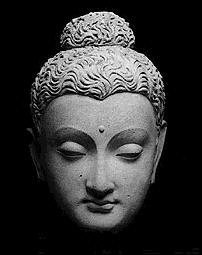
The head awakening gives serenity and wisdom, as shown in many traditional Buddha depictions. It is the seeing of all as Spirit.


The heart awakening gives love and compassion for all beings, independent on who they are or what they do, and is reflected in depictions of Avalokitesvara, Kuan Yin, Chenrezig, Kanzeon. It is the loving of all as Spirit.


The belly awakening gives a deep sense of all as Spirit at a physical level, with the whole body and emotions, a deep sense of safety, nurturing and comfort. This profund sense of physical well-being (in the midst of whatever else may be going on) is reflected in Hotei, the big bellied laughing Buddha. It is the feeling of all as Spirit.

In each case, Big refers to that which leaves nothing out. The nondual view embraces and goes beyond all polarities. The open heart is open to all beings without exception, and to all forms no matter their specifics. The belly awakening is an awakening into the fertile darkness that is the ground of all form, the womb of all form in its infinite richness.

The view, love and fertile darkness is the seeing, loving and feeling all as Spirit, as awake emptiness and form, beyond and embracing all polarities.

Labels: , , , , ,

The three centers and the Big Mind process |

A few more notes about exploring the three centers through the Big Mind process.

First...

Different forms of embodiment

We can see the three centers as different forms of embodiment.

The head center is seeing it all as Spirit, as awake emptiness and form, absent of I. This human self is just part of that, and Big Mind does not require a functional connection with a human self. Big Mind is grounded in emptiness, seeing all forms as no other than emptiness, and the awakening of the head center allows our view to reorganize within a nondual realization.

The embodiment of Big Mind is to live from seeing all as Spirit.

In the heart center, we move slightly into the realm of I and Other, still within the context of all as Spirit. From here, compassion naturally comes up. Big Heart is about compassion, gratitude, pain, joy, bliss - all of which require a sense of I and Other. These are grounded in subtle energies, and the awakening of the heart center allows our heart to reorganize to all as Spirit, to stay open to all forms Spirit takes.

The embodiment of Big Heart is to live from loving all as Spirit.

The belly center has everything to do with the physical body, of sensing and feeling all as Spirit on a physical and emotional level. It is grounded in the physical body of this human self, allowing every cell of the body and the emotional level to reorganize to all as Spirit.

The awakening of the belly center is to live from feeling all as Spirit.

Exploring the three centers through the Big Mind Process

In the standard version of the BM process, the head and heart centers are explored thorough Big Mind and Big Heart, but the belly center is included only implicitly, if at all.

For each of the centers, we can explore its (a) aspects, flavors and characteristics, (b) how existence appears when filtered through the center, and (c) how to live from it.

Big Mind (a) has formless and form aspects, (b) existence appears as awake emptiness and form, absent of any I, when filtered through the head center, and (c) we live from the head center with detachment, transcending any identification with any particular aspects of Big Mind.

Big Heat (a) has active engaged yang and receptive holding yin aspects, (b) we love all forms as Spirit, and (c) we live from this love of all forms, independent of their particular expressions.

Existence through the belly center (a) is dark, fertile and a ground of form, (b) we feel, in every cell of our body, all as Spirit, and (c) we live from this sense of quiet, deep nurturing blackness, with less or no emotional reactiveness.

We can also explore the difference between how these centers operate within the context of a sense of separation, and within an awakening to all as Spirit.

The view goes from fragmented and dualistic to being informed by a nondual realization. Our heart goes from being partially open and partially closed to being open to all form aspects of Spirit, independent of their characteristics. Our body goes from being tense and rigid to being more relaxed and supple, and our emotions goes from being reactive and fearful to giving a sense of nurturing fullness.

The Big Mind process is already well developed for exploring the two first centers, and it does not seem too difficult to expand it to include more explicitly the belly center.

What happens the body of this human self when all is felt as Spirit? What happens with the emotions? How is it to live from feeling all as Spirit? How is it right now? Allow this human self to marinade within seeing, loving and feeling all as Spirit, and notice what happens to it.

Labels: , , ,

Big Mind process and the belly center |


The head and heart centers in the Big Mind process

The Big Mind process is in a way a simulation of an awakening of the head and heart centers. We get to taste, to dip our toes into, how Spirit reveals itself through the head center (Big Mind) and the heart center (Big Heart). We get to taste how it is to see and love all as Spirit.

The belly center in the Big Mind process

In the process, there is the inevitable taste of feeling all as Spirit as well, of Spirit filtered through the belly center, although this one is almost an accidental side-effect.

To amplify this taste of Spirit filtered through the belly center, we can allow the human self to feel how it is to see and love all as Spirit, to feel into it, sink into it, marinade within it, allowing the body and emotions to reorganize within this context of all as Spirit.

How does it feel in this human self, in the body, when all is seen and loved as Spirit?

How does the body change? Does it relax? Soften? Does it melt away rigidity?

How do the emotions change? Do they relax? Soften? Go from reactive and fearful to giving a sense of nurturing fullness?


Big Mind, Big Heart, and Big Belly

In addition to Big Mind and Big Heart, there is now also Big Belly (!) It is the feeling, the sensed feeling, of all as Spirit. Of all of Existence as a Big Belly, soft, warm, nurturing. A cosmic womb, dark and fertile, allowing the body and the emotions of this human self to reorganize within all as Spirit.

Dipping the toes, diving into, and deepening within

The Big Mind process itself, of course, only gives us a taste of Spirit filtered through these three centers. We are just dipping our toes in the waters.

And becoming familiar with it in this way, simulating an awakening of these three centers, and allowing our view, heart and feelings to begin to reorganize within this new context, sets the stage for a larger shift, for a more full-bodied diving into the water, and then for deepening within it.

Labels: , , ,

The complementarity of Atman and Anatman Friday, December 01, 2006 |

I just finished up The Supreme Self by Stan Trout, which is one third autobiography, one third history of mysticism, and one third how different universal questions appears when Spirit awakens to itself.

As it is written by somebody who is intimately familiar with Big Mind, the essence of the various traditions is brought to the foreground and presented in a very clear and simple way. (Which by necessity means that the diversity and difference in flavor goes into the background, leaving out some of the richness.)

One thing that came up for me is the complementarity of Atman and Anatman, of Self and no-self, and the traditions emphasizing one or the other.

There is the Self, aka Buddha Mind, Big Mind, Brahman, and so on. The field of seeing and seen, of awake emptiness and form, as that beyond and including all polarities. It is "I" as awake emptiness and form, as the field as a whole, as Big Mind.

And there is the no-self, the field of seeing and seen absent of I anywhere. It is the field of awake emptiness and form awakening to itself as a field with no center anywhere, with no I as any segment of itself. There is doing, but no doer.

There is a beautiful complementarity of Self and no-self, and this is expressed within each of the traditions talking about Atman or Anatman, whether they emphasize one or the other in how they talk about it, or as a path into this realization.

The Big Mind process strikes me as a practice that especially well includes both. We get to explore ourselves as Big Mind, as Atman, as awake emptiness and form, as the whole beyond and including all polarities. And we get to explore the no-self, the absence of I anywhere in this field of awake emptiness and form, including in all the different personal and transpersonal voices. They are all there, available, yet each one of them inherently absent of an I.

Labels: , , , ,

Spirit as 1st and then 3rd person Wednesday, November 22, 2006 |

This is something I have been curious about for a while...

I have seen, and hear about, settings where somebody talks about Spirit as 1st person, the listeners get confused, and then they continue to just talk about it - only making people even more confused and up in their heads.

Jen is taking the foundations course at Center for Sacred Sciences, and last time, they talked about the First Fundamental:

  1. Consciousness alone is absolutely real
    The appearance of an objective world distinguishable from a subjective self is but the imaginary form in which Consciousness Perfectly Realizes Itself.

If we don't have an immediate taste of it, it won't make sense. And then it just goes into the realm of ideas and spins around and around, as it apparently did in the discussion about this principle.

And something similar is happening at the Breema Center. The head teacher talks about the Ocean (Spirit, Big Mind) while people sit and listen. But it is difficult to see that it does much for the listeners. I know it does just about nothing for me, because it is just somebody talking about it, and in a relatively abstract and removed way, using words that does not invite it to come alive in immediate awareness.

So why not use one of the many ways to help people find it for themselves, to notice that it is already alive in immediate awareness? There is no shortage of methods that really work out there, and also anyone for whom it is alive can without too much trouble find words that are fresh, alive, immediate, and invite a fresh, alive and immediate realization in the listener.

There are pointing out instructions in many traditions. And maybe even more helpful, there are many forms of inquiry which, in a step-by-step fashion, allows people to discover it for themselves right there and then.

We can ask when you close your eyes and try to find yourself, here in this moment, who or what do you discover yourself to be?

Or we can guide through an exploration of the seen, the seeing, and then both absent of any I. (Notice sights, sounds, tastes, sensations, thoughts. Notice how they all come and go. Can you find an "I" anywhere in this changing world of form? What is it that does not change? What is this awareness that all of this unfolds within and to? Is this awareness within time or is time within it? Is it within space, or is space within it? Can you find any color, form, extent, beginning, end to this awareness? Where does the seen end and the seeing begin? Can you find a boundary between the seen and the seeing? Can you find an I anywhere in all of this?)

Another, very similar and more systematized approach, is the Big Mind process which also allows it to come to the foreground of awareness within just a few minutes.

Instead of talking about it first, and then expect people to find it, why not allow people to have a taste first, and then explore it through language. First, going to Spirit as 1st person, then include Spirit as third person.

If we want people to know about apples, it makes sense to first allow them to have a taste, and then we can explore it through language as much as we want - exploring its texture, sweetness, crunchiness, biology, how to grow them, the history of apples in the human civilization, and so on.

To be fair, both CSS and the Breema Center do allow people the taste as well, in other settings. And that is actually their focus. But it just seems odd to me in the particular situations where it all goes to the head, and stays there, going around and around in the realm of ideas, when it could be grounded in a real taste right there and then.

Labels: , , ,

Unraveling knots: processing at all levels of our being Wednesday, November 01, 2006 |

Whenever there is a realization, there is also the invitation of allowing it to be processed at all levels of our being: physical body, energies, emotions, cognitive and soul, or at each of the chakras, or at all the levels or whatever other model we use.

This is true when it comes to the unraveling of any of our knots and hangups, whether at our human level or in the awakening to realized selflessness. (The two are not that different, just two aspects of the same process.)

There is a belief in the world as a dangerous place, and our whole being organizes around that belief - at all levels. This knot can be unraveled starting at any level, and allowing each of the other levels to be included as well.

In The Work, we use the cognitive level as a starting point, inviting all the other ones to join through sitting with whatever insights come up, allowing them to penetrate, allowing our being to steep in them. In Breema, we use the body as a starting point, allowing our whole being to participate. In diksha, the energy body is the starting point, allowing each of the other levels of our being to reorganize.

There is the core belief in the idea of I, and our whole being organizes around it. Our whole being reflects this belief, as it does with any other belief. It is organized as if it is true, to the extent it is able to.

And as with any other knot, the starting point for unraveling it can be at any level: It can be cognitive, as in the many forms of self-inquiry. It can be the body, as in Breema. It can be energetically, as in diksha. And from there, all the other levels of our being can be invited to reorganize as well. What starts in one place seeps through our whole being, inviting it to reorganize.

Example

I see how this played itself out in the initial awakening in my teens. Spirit awakened to itself as Ground, seeing and seen, as everything and everyone. Spirit awakened to itself as beyond and including any and all polarities.

Yet, at the emotional level (and maybe energetic and physical levels) of this human self, the previous organization - coming from a sense of separation - remained to some extent. The emotional level behaved as if there was indeed separation and something to fear.

There was certainly some healing and reorganizing of these emotional patterns, but the old patterns - organized around the knot of separation and fear - were ingrained, and I didn't quite know how to work with it effectively, so they did not reorganize and heal completely.

The clear realization at the levels of Spirit, soul/heart, and cognition did not completely extend into the emotional. There was a pocket there at the emotional level where the realization of all as Spirit did not reach.

So although there was a very clear realization of all as Spirit - including others and any emotion - the emotions of fear still came up in social situations.

How to

It is OK, of course, but for the human self to be a more effective and clear vehicle for Spirit, all levels need to reorganize, heal and mature.

It is a process, and one that can be helped along with some conscious work.

In of the ways to do this through the versatile Big Mind process where any of the voices can explore their relationship with each other and Big Mind/Big Heart, and can be explored from Big Mind/Big Heart. This allows them to reorganize to this new context of realized selflessness (even before it is fully realized!) .

Labels: , ,

Seeking and nonseeking Tuesday, October 24, 2006 |

Adyashanti likes to talk about what happens when wanting falls away: We want something, get it, and experience the fullness and contentment that is there when the wanting goes into the background for a while.

Of course, his point is that the absence of wanting is what gives this sense of fullness and contentment, not getting what we (think we) want. What we think we want may be an object, but what we really want is to experience the fullness and contentment always here, and coming into the foreground when the wanting is in the background.

What do I really want?

One way to explore what we really want behind our surface wants is to make a list, and then for each want ask what do I hope to get out of this? And then the same question, until we arrive at something that is not reducible to something else.

A simple sequence may look something like this: I want money >> security, safety, freedom >> happiness, freedom from suffering, freedom from and not victim of circumstances.

Is it true it is not already here?

Having found this, we can ask ourselves is it true that what I seek is not already here?

Happiness: yes, I can find that right here. When there is a simple quiet being with whatever is experienced, there is a quiet happiness and bliss here, independent of whatever else is experienced. Freedom from suffering: yes, I can find that too here. There is something here always free from suffering and any other content. Something not touched by content. A wakefulness, clarity, capacity for everything to arise within. Seeing free from any of the particulars of the seen. Freedom from circumstances: yes, that too is right here, in the same stainless wakefulness and seeing.

Big Mind process

Through the Big Mind process, we discover the same but with more differentiation.

We see how seeking mind is immensely useful in many ways, including on a purely practical human everyday level. Yet, if seeking mind is typically in the foreground, there will be a chronic sense of dissatisfaction. There is always something to seek that is just around the corner, just over the next hill, just into the future or over there.

When nonseeking mind comes into the foreground, there is a sense of fullness, quiet, contentment. Here, we notice that what we seek is already here.

They both have their functions: Seeking mind on a practical relative level, and nonseeking mind as a reminder of the absolute.

In the relative, there may indeed be lack and something to gain. In the absolute, there is nothing missing. Both are needed.

Labels: ,

The coin of ignorance: exploring both sides Wednesday, October 04, 2006 |

In Buddhism, they talk about three (greed, anger, ignorance) or five (greed, anger, pride, envy, ignorance) poisons, or roots of suffering.

All of these can be collapsed into one: ignorance.

One side of the coin: ignorance of what we already are

And this ignorance can generally be seen as ignorance of what we really are, as Big Mind, Spirit, emptiness and form, Headless, absent of any I.

Other side of the coin: ignorance of the mechanisms of samsara

At the other side of the coin, this ignorance can be seen as ignorance of the mechanisms of Samsara. What, specifically, is it that happens when there is a mistaken identification. When Big Mind suddenly takes itself to be only a fragment of itself, as a part of the seen or as the seeing itself.

What is it that is really happening, and how can I explore that, over and over, in my own experience, so there is a gradually deepening familiarity with this process, eventually leading to a natural release from it.

Exploring the coin

There are many ways to explore either or both sides of this coin.

The Work: exploring both sides of the coin

Through The Work, we explore - in quite some detail, one way of looking at the mechanisms of samsara. What happens when there is a belief in a thought, when an abstraction is taken as truth itself? What are the consequences of this, in the many areas of my life? How does it unfold?

Towards the end of the inquiry, in question four and the turnarounds, we get to see who or what we are without this belief.

By doing this, over and over, on whatever beliefs remain and come up, we learn not only about the mechanisms of samsara but also what we are without beliefs. Gradually, there is more and more of a taste of and emerging into Big Mind.

Other approaches

The Big Mind process is another way to explore both sides of the coin, to almost infinite detail.

Headless experiments may not guide us through the terrain in the same detail as The Work and the Big Mind process, but they certainly set the stage for it by allowing us a taste of what we really are. From here, we are free to explore on our own, in as much detail as we want.

Labels: , , , ,

Headless Way Monday, October 02, 2006 |

There has been some interesting comments and messages after I helped post the Headless experiment videos at YouTube.

Different responses: hooked, not hooked, and upset

As with so much else, some get it right away and are hooked (like me). Others get it and move on to something else. Some are interested, but don't quite get it. And others again don't get it and are upset that somebody can be so stupid. (The second and third seem to be quite common when I show the videos to people, and I got the third response from someone through YouTube.)

It seems that people who have some experience with what the headless experiments point to are more likely to get it. And why some who get it are hooked and others not must have to do with how we are individually put together, it is our unique flavor that shines through.

Here is one way to talk about the headless experiments...

Conventional view

There is of course a head here, attached to this body. And as long as the center of gravity is in this human self, there will be an identification with this head. It will appear as the center, as I as opposed to the rest of the world.

Headless shifts

The headless experiments invites us to shift our center of identification out of this body, this head, and this human self. It invites us to find ourselves as what the world of form appears within.

I as awake space, capacity for the world

In the beginning, it may be helpful to see this as space, awareness, capacity for the world, and so on. I am the awake space the world of form arises within. This human self is just one small part of the tapestry of this world of form as it arises right now, and there is no more identification with this human self than with anything else. It is all just happening, living its own life. There is doing but no doer.

Headless = Big Mind, realized selflessness

And then, there may be another shift into realizing that even this seeing, this awareness, this space, has no I in it. There is no I in the seen, as this human self and the rest of the world of form, and there is no I in the seeing. It is all just happening, with no I anywhere.

This is Big Mind, already right here, even as there is a sense of I placed in the seen or the seeing. Through the headless experiments, or the Big Mind process, or other forms of inquiry, Big Mind can notice its own nature - as a seamless field of seen and seeing, absent of I anywhere.

Movie analogy

One way to talk about this is to use a movie analogy.

The content of awareness stays the same: it is the sensations, smells, tastes, sights and sounds conveyed through this human body, reflecting this human self and its surroundings.

Yet the context shifts from a sense of I, typically placed on this human self, to realized selflessness. None of this, the seeing or the seen, has any I in it.

It all becomes a field, a terrain, a tapestry, absent of any I anywhere.

And it is similar to a movie screen with characters and their surroundings, yet with no I anywhere, not as the seen up on the screen and not as the seeing of it. It is all just happening on its own.

Relative and absolute

So there is this field of emptiness and form, of capacity and world, of seeing and seen, realizing itself as absent of I anywhere. At the same time, it is somehow functionally connected with this particular human self. It is all absent of any I, yet within the world of form - and for purely practical purposes, this human self is me and the rest of the world is other. And this human self has a head, so if there is a low doorway it will bend down.

I am headless, since this I is either awake space for the world of form, or absent. But this human self very much has a head, and will take care of it as needed.

Labels: , ,

They burnt me at the stake: stories as mirrors mainly Wednesday, September 27, 2006 |


I read a news article about a psychologist in Norway getting in hot water for using regression therapy, using stories of apparent past lives to get at what is alive right now.

According to the news article, he had told his client that she had been burnt at the stake in a past life, which would explain some of her problems in this life.

Problems with seeing the story as real

Of course, the problem here comes if the therapist and/or the client actually see these stories as somehow real, if they add another story saying that this is what really happened.

At the very least, it can be a sidetrack and distraction, taking focus away from the story as a reflection of what is very much alive right now.

The client may get weirded out in believing it is really a story about a past life, or that the therapist thinks so. This can possibly get the client in trouble, amplifying the initial problem and the apparent solidity of the stories around it. And it can also, for good reasons, get the therapist in trouble. This is apparently what happened in this case.

Any story as a mirror

Any story is a reflection of what is very much alive right now, they are mirrors. And this is independent of their apparent source: waking life, dreams, daydreaming, fantasies, active imagination, regression therapy, movies, books, religions, science.

They reflect what is alive in us right now, especially if they have a charge for us, small or big or any flavor.

And there are many ways to explore these mirrors.

Ways to using stories as a starting point for inquiry

In The Work, I identify a stressful belief triggered by the story and inquire into it. They shouldn't have burnt me at the stake. What is the turnaround? I shouldn't burn me at the stake. Yes, that feels more true. I am the one doing it, daily, over and over. I burn myself at the stake.

In the Big Mind process, I explore dynamics among some of the voices related to the story. I was burnt at the stake. I can explore the voice of the body, of self-preservation, the protector, vulnerability, victim, perpetrator, helplessness, impermanence, and then look at it all from some of the transcendent voices such as Big Heart and Big Mind.

In Process Work, I can unfold the process behind the initial images and story and see where it goes, following the bread crumbs back home to wholeness.

In active imagination, I interact with whatever characters are there, asking them what their role is, responding differently to the situations and see where the story goes now.

In all of these ways, the initial story becomes an access point into exploring what is alive right now, bringing it into awareness, allowing the knots to unravel.

Labels: , , ,

The third eye: transcend and embrace, and how to develop it Thursday, September 21, 2006 |

The third eye (ajna chakra) has to do with seeing auras, seeing into the future, seeing past lives, and such. Right?

Holding polarities: transcend and embrace

Well, maybe, but more simply, it has to do with holding polarities. It is the third eye that transcends and embraces the views from the two conventional eyes.

It transcends in that it sees and holds both, yet is inherently free from and is not identified with either.

It embraces, in that it includes and is informed by the conventional views.

So how can we develop or connect with the third eye?

How to develop the third eye: Big Mind process

One way is the Big Mind process. We explore the different voices at the personal level, and see that while all of them are very useful in our human life, none of them holds any absolute truth.

More specifically, we can explore polar opposite or complementary voices. We see see that they each have an important function, they each serve our human self in a very real way. Yet, they also hold apparently opposite views of the world.

So we can move beyond these two into the voice that sees both.

This voice is inherently free from and not identified with either.

Yet it embraces both. It can freely engage with either. It can bring either forth as needed in a situation. It can draw on information from both, integrating it into a fuller picture. It is the voice that holds and engages with the polarity.

How to develop the third eye: The Work

Another way to develop these aspects of the third eye is The Work.

We take a belief in a thought. Explore the consequences of holding onto this belief. Explore who or what we would be without attaching to the thought and seeing it as inherently true. And turn it around to its many opposite versions, and explore the grain of truth in each of these.

In this way, we see that any statement - any story, idea, thought, map, model, interpretation, is inherently free from any absolute truth.

They are all relative truths.

They can be very useful as practical guidelines, for helping our human self orient and function in the world.

Yet if there is an attachment to them, if they are seen as absolutely true, if there is a belief in them, it creates no end of drama, suffering and discomfort.

Through this form of inquiry, we find the space that is free from yet embraces all of the relative truths, in this case the initial statement and all of its turnarounds.

Labels: ,

True Meditation & Meditative Self-Inquiry Saturday, August 26, 2006 |

I am listening to Adyashanti's True Meditation and Spontaneous Awakening, and find a deep appreciation for the wonderful simplicity, freshness and clarity of his teachings. I also see how the practices he talks about come from a Buddhist tradition, which is not surprising since he studied with a student of Maezumi Roshi, as I did/do as well (in my case, Genpo Roshi).

What Adyashanti describes as true meditation, just allowing anything arising to be as it is, is a description of shikantaza, or what is sometimes called just sitting. And the practice of meditative self-inquiry is similar to koan studies, and even more similar to the Big Mind process developed by Genpo Roshi.

The meditation allows awareness to notice itself as aware of content, and also as no different from its content. Said another way, it shifts the center of gravity from the content to the seeing of the content, allowing the content to live its own life.

The inquiry allows for a clearer seeing of this process, and also for a clearer seeing of what we really are. Am I the changing content? Am I that which does not change? Am I the seen? Am I the seeing? Is there a separation between the changing content and that which does not change? Am I the seeing and the seen?

Labels: , , ,

›› Note: Moved to new address!

Please go to www.absentofi.org for current posts.

Continue the exploration...

integral & buddhist blogs
blogmandujoe perezintegral options cafeintegral harborken wilberpongsatornthis is this~c4chaos

the work blogs
byron katelet's do the worksoul surgery

websites
a. h. almaasadyashantibig mindbreemaheadlessnessintegral instituteintegral spiritual centerprocess work centerthe workzaadz

websites ii
center for sacred sciencesglobal mindshiftimaginifyintegral wikijoanna macykosmos journalparabolaseti institute the great storytricyclewikipediawikipedia spirituality portalworldchangingyes! magazine

miscellaneous
my starred itemsmy librarymoe at technoratimoe at icerocket

items of interest

Creative Commons License StatCounter - Free Web Tracker and Counter