<body><script type="text/javascript"> function setAttributeOnload(object, attribute, val) { if(window.addEventListener) { window.addEventListener('load', function(){ object[attribute] = val; }, false); } else { window.attachEvent('onload', function(){ object[attribute] = val; }); } } </script> <div id="navbar-iframe-container"></div> <script type="text/javascript" src="https://apis.google.com/js/platform.js"></script> <script type="text/javascript"> gapi.load("gapi.iframes:gapi.iframes.style.bubble", function() { if (gapi.iframes && gapi.iframes.getContext) { gapi.iframes.getContext().openChild({ url: 'https://www.blogger.com/navbar/4053797?origin\x3dhttp://absentofi.blogspot.com', where: document.getElementById("navbar-iframe-container"), id: "navbar-iframe" }); } }); </script>

Reinforcing cycles Tuesday, December 05, 2006 |

I went to a coffee shop this morning for breakfast, and had lots of opportunity exploring the dynamics of the field, as I wrote about in the previous posts. I also see how the words are probably very similar to what I have written in the past, but as it arises in the present, the experience of it is of being completely fresh and new. (From the inside perspective, it is fresh and new, for others who may read it, just the same old :) )

Another thing I explored...

The field (a) filters itself through a sense of I and Other, and with this, there is (b) a sense of something, more specifically an exclusive identity, to protect and defend. There is a belief in the idea of a separate I, and an elaborate and exclusive identity of this I. (c) When something arises that is outside of this identity, defense kicks in - either passively waiting to be engaged, or actively. (d) Along with the impulse to defend comes a set of sensations. (e) A story or set of stories are added to these sensations, interpreting them (as tension, contraction, anger, fear) and the wider situation (he is...). (f) These stories reinforce the sensations, make them seem more solid and stable, they reinforce the initial story of I and Other, and they reinforce the exclusive identity and of having to defend this identity against something else arising in the field.

So there are several reinforcing cycles here. The first between the sense of I and Other, and the trigger and reaction (the situation may be interpreted to justify the reaction, reinforcing the sense of I and Other, and of something to defend). And then also between the consequences of the reaction and the trigger (he did... so I get angry, uncomfortable, afraid), and the sense of I and Other (he did... so I...).

It is the job of the mind to make our beliefs seem real, and it does the job well. But it also means that when we see through it, even at one point of this chain of events, it all tends to unravel. And as we allow it to unravel, over and over, the habitual patterns gradually change.

Labels: , , ,

Multilayered journey |

After seeing the rather heavy-handed and one-dimensional use of symbolism in The Fountain last night, I thought of how it could be done differently, and also what type of stories I am more drawn to.

Mainly, they tend to be multi-layered, functioning at many different levels, the way mythology and many fairy tales do. One the surface level, they are adventures, exciting enough in themselves to hold people's attention and interest even if the adventure level is all they are aware of. At another level, they symbolize our path through life, our relationships with others, ourselves and various life situations. They also represent dynamics within our psyche, for instance the drama between persona and shadow. And finally, the most interesting of them also represent the spiritual journey through to awakening.

More specifically, it would be interesting to see contemporary stories that dramatize the path of individualization and awakening: (a) the field of seeing and seen, (b) filtering itself through a sense of I and Other, (c) identifying in a conventional way with a human self, going about its daily life, (d) breaking out of the trance, recognizing the trance, (e) struggling with the dynamics of persona and shadow, peeling of new layers of the shadow, including (f) finding itself also as energy, soul and the formless, (g) and then die to a sense of I and any identity whatsoever, awakening as the field of seeing and seen, absent of I anywhere.

And this is, of course, the Matrix Trilogy: multi-layered, offering something for everyone, representing the hero's journey to individualization and finally full awakening.

Neo starts out living a conventional life, as a drone in a corporate office (c). He is kicked out of the trance through circumstances beyond his control (d), and awakens to himself as far more than he had imagined. He starts embracing the positive (immediately desirable) aspects of his shadow (through the training), and is also forced to face and eventually embrace the negative (apparently undesirable) aspects of his shadow (Agent Smith et al) (e). At the end of the first movie, he also finds himself as more than just a human of flesh and blood, but also as energy and consciousness (f). Finally, through the face-off between the final remains of what appears as I and Other, he dies as what he takes himself to be, and awakens to a new life.

As traditional mythology shows us, there is no end of variations on this story, and no end of aspects of it to be explored more in detail, so there is lots of room for many more movies exploring this, even after The Matrix. Especially if they are a little more sophisticated about it than The Fountain (a good attempt, but does not quite make it.)

Labels: , , ,

Gratitude and stories we tell ourselves Friday, November 24, 2006 |

The most profound truths are often the simplest ones as well, and sometimes the most difficult ones to realize (such as selflessness) and practice.

One of these simple truths is gratitude: practice gratitude, and you'll be happy. Practice ingratitude, and you'll make yourself miserable.

It is the power of the stories we tell ourselves.

Stories we tell ourselves, bringing misery or happiness

I can tell myself stories of how what I have is less good than how it used to be, how it can or could be, how it is for others, and so on. I can compare my intelligence to the most intelligent, my money to the most wealthy, my house to the most elegant homes, my education to the best education, my looks to the most beautiful, my skills to the most skillful, and I am bound to find myself lacking and make myself miserable.

Or I can reverse it by looking at what I can be grateful for. I can be grateful for health, friends, family, community, house, food, education, free time, access to nature, peace in my community, and so on.

A daily practice

Just as I can easily find a million reasons to make myself miserable, I can find infinite reasons for gratitude. There is always one more, and one more.

Making ingratitude into a practice, I find contraction, anger, resentment, guilt, shame, fear, depression, fatigue, holding on, and misery.

Making gratitude into a practice, I find receptivity, joy, peace, appreciation, well-being, passion, letting go, and happiness.

It is as easy as taking time to look for what I can be thankful for, throughout my day, and it is easy to find.

Why stories work: because I believe in them

Whether I tell myself stories of ingratitude or gratitude, one is as true or untrue as the other. The reason they impact me as they do, is that I believe in them to a certain extent, and I believe in stories about what they mean.

I have money, and that means that ..., and that is good. I have less money than many others, and that means that ..., and that is not good.

The core belief: the idea of I

Ultimately, the stories have power because of the core belief in each of our lives: the belief in the idea of I, as separate from others, as a unit in space and time, subject to birth and death, joy and happiness, health and disease, fortune and misfortune.

What is already alive in our immediate awareness is simply the field of seeing and seen, inherently absent of any I anywhere, yet also with an overlay of a sense of I placed on this human self.

And this overlay, this belief in the idea of I placed on just a segment of this field, is the root of the misery, and it is the reason why stories of ingratitude create misery and stories of gratitude create happiness.

When Ground awakens to itself, the belief in the idea of I falls away

When this field awakens to itself as a field, absent of I anywhere, with no center, with no subject and no object, with everything as subject and object, then these stories are seen as what they are - just stories, with no substance, absent of any absolute truth in them.

It is all Spirit, in all its many forms, and Spirit is in the foreground independent of what particular form it takes. It is Spirit experiencing Spirit. There is only a quiet joy, along with whatever else arises.

There is natural gratitude, independent of stories.

Labels: , , , ,

They burnt me at the stake: stories as mirrors mainly Wednesday, September 27, 2006 |


I read a news article about a psychologist in Norway getting in hot water for using regression therapy, using stories of apparent past lives to get at what is alive right now.

According to the news article, he had told his client that she had been burnt at the stake in a past life, which would explain some of her problems in this life.

Problems with seeing the story as real

Of course, the problem here comes if the therapist and/or the client actually see these stories as somehow real, if they add another story saying that this is what really happened.

At the very least, it can be a sidetrack and distraction, taking focus away from the story as a reflection of what is very much alive right now.

The client may get weirded out in believing it is really a story about a past life, or that the therapist thinks so. This can possibly get the client in trouble, amplifying the initial problem and the apparent solidity of the stories around it. And it can also, for good reasons, get the therapist in trouble. This is apparently what happened in this case.

Any story as a mirror

Any story is a reflection of what is very much alive right now, they are mirrors. And this is independent of their apparent source: waking life, dreams, daydreaming, fantasies, active imagination, regression therapy, movies, books, religions, science.

They reflect what is alive in us right now, especially if they have a charge for us, small or big or any flavor.

And there are many ways to explore these mirrors.

Ways to using stories as a starting point for inquiry

In The Work, I identify a stressful belief triggered by the story and inquire into it. They shouldn't have burnt me at the stake. What is the turnaround? I shouldn't burn me at the stake. Yes, that feels more true. I am the one doing it, daily, over and over. I burn myself at the stake.

In the Big Mind process, I explore dynamics among some of the voices related to the story. I was burnt at the stake. I can explore the voice of the body, of self-preservation, the protector, vulnerability, victim, perpetrator, helplessness, impermanence, and then look at it all from some of the transcendent voices such as Big Heart and Big Mind.

In Process Work, I can unfold the process behind the initial images and story and see where it goes, following the bread crumbs back home to wholeness.

In active imagination, I interact with whatever characters are there, asking them what their role is, responding differently to the situations and see where the story goes now.

In all of these ways, the initial story becomes an access point into exploring what is alive right now, bringing it into awareness, allowing the knots to unravel.

Labels: , , ,

Playing the game: taking a fictional character as real Wednesday, September 20, 2006 |

Say there is a fictional character, and you want to make the stories about him or her more engrossing for yourself. What do you do?

Pretending a fictional character is real

One way is to pretend the person really exists, to take the stories seriously and as reality. That way, you can allow yourself to go into it more fully, to put more energy, attention and interest into it than you otherwise would.

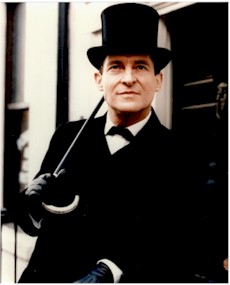
And that is exactly what many Sherlock Holmes scholars and fans do. They play what some refer to as The Game: studying Sherlock Holmes as if he was a real flesh-and-blood person, Dr. Watson his biographer, Conan Doyle his literary agent, and the stories themselves histocial documents.

Playing the game to bring out the richness of the stories

In this program on Sherlock Holmes from To the Best of Our Knowledge, Leslie Clinger - author of The New Annotated Sherlock Holmes, talks about The Game, or Holmesian Speculation.

Listen about 25 minutes into the program:

It's a game. And it's a game we play to enhance our appreciation of the story. When we treat them as real, we can justify spending a great deal more effort in researching the background of the stories and in working up explanations for the stories in a way that brings out their richness.

Lila

And so it is with our lives as well, according to many mystics and spiritual traditions.

This human self that there is so close an identification with, that seem as an I, that is taken so seriously, that appear so real, so solid, so true. This human self has no I in it anywhere. There is no I in the seeing of it, in the awake space it arises within and as. There is no I in the seen, in this human self and all its aspects: its sensations, feelings, emotions, thoughts, behaviors.

There is no I anywhere in the seeing or the seen. There is only the Ground of empty awakeness the seeing and the seen arises within and as, with no I anywhere. There is doing, yet no doer anywhere. There is choosing, yet no chooser anywhere. This human self just happens, absent of any I. It lives its own life, as anything else in the world of phenomena lives its own life.

This self, as an I, as a separate entity, as a chooser, as a doer, is fictional.

And what makes it a more interesting and engrossing character? To pretend it is real. To take it as I. To have a close identification with it. To live as if it is separate from anything else. To see myself as it, and subject to birth and death, joy and suffering, health and happiness, gain and loss, and all the other ingredients of the human drama.

There is no drama without identification with this human self. And the drama is what makes it engrossing. It is what makes it interesting, at least for a while.

A new flavor of the game: seeking awakening

And then there is a weariness of this drama. A growing readiness to move on. For Ground to awaken to its own nature as awake space, as seeing and seen, absent of I.

There is a new flavor of the game, not much different from all the other flavors, and this one is called spiritual seeking and practice.

This and the other ones are all games where human self is taken as an I, and the new flavor is to try to have this I awaken. Which of course is impossible. This human self can never awaken, and there is no I anywhere anyway - only a temporary and mistaken identification as an I and this human self, but it makes for another interesting chapter of the drama.

A new game: this human self functioning in the context of realized selflessness

And then there is a significantly new game: Ground awakens to - or rather remembers - its own nature, and now the game becomes to allow this human self to live from this awakening, to mature, evolve, interact, experience, explore within this new context of realized selflessness.

It is a whole new section of the story, yet one that is no less juicy. And one that has no end, at least as long as there is a functional connection to human self.

Labels: , , , ,

Absolute & Relative Thursday, June 08, 2006 |

The Absolute is what is without or distinct from any stories about it. It is stories when they arise, but cannot be described by them. It is the essence of thoughts themselves - yet not what thoughts tell.

The Relative is what arises with stories - filtered through stories - it is distinctions and polarities, this and not that. It is essential for functioning as a human being in the world. And it is peaceful when stories are not attached to, and stressful when they are - when the stories are taken as an absolute, as a truth, as anything else than fictional.

When what is awakens to its own nature, of everything absent of any I, then the Absolute is revealed as well. It is all God. It is all beyond and including all polarities. It is all emptiness dancing. And that is all.

And when what is awakened to its own nature meets what is (apparently) not awakened to its own nature, the Relative arises as well. Emptiness dances as the Relative. I am you, and if you manifest the Relative, then that is what I am as well. Your wish for liberation is my wish for you, as me. And that is all.

The Absolute - what is awakened to its own nature, and the Relative - what is (apparently) not awakened to its own nature, are emptiness dancing as the Absolute and as the Relative. Both are Ground temporarily manifesting. Both are God exploring itself.

And this is a story too. As any story, it can appear to be an help for navigating the world or not. And as any story, it is peaceful when not attached to and stressful when attached to.

If this story is seen as true, then something else becomes not true - something to defend against. There is an attachment to this story, and an attachment to protecting against other stories. In being caught up in a battle of stories this way, there is stress. And stress is the signal of being caught up in a fictional battle, of taking a fictional battle as real, as all there is.

Labels: , ,

Catching Contractions at Two Points Wednesday, June 07, 2006 |

I have experimented briefly with the form of insight meditation where we put labels on the various sense categories, such as sensation, smell, taste, sound, sight and thought. Something arises, I put a label on it. Something else arises - another label. And so on. And I may occasionally put the label "thought" on the previous labels just to remind myself about that as well.

Catching the connection between sensation and thought

I see that for me, when a contraction is about to come into existence, there is usually (a) a sound or sight, (b) a following sensation, and (c) a thought - a story about what that sensation means, including in relation to the initial sound or sight.

For instance, I heard a house mate walked downstairs with shoes on, a sensation arose, and the though "irritation" came up. Seeing the sensation as sensation and the thought as thought, the connection between the two dissolved. They were each liberated from each other, and the thought was liberated from being attached to.

If I had attached to the thought "irritation", the sensation may have intensified and been experienced as uncomfortable. This would most likely have spawned additional thoughts, and soon a whole story would be in place about house mates walking into the house with shoes on and what that means. ("People don't listen." "Americans are unsophisticated." And so on.)

In daily life, it seems that noticing the sensation and the thought placed on top of the sensation allows the connection between the two to dissolve. There is just a sensation, and then a thought, and that is all. They each live their own lives. The story is not attached to and does not unfold into a drama.

Another way to say it is that I catch the story of the connection between the sensation and the interpretation of the sensation, and the apparent connection dissolves there. I see that the story of connection is just a story.

Catching the initial story

Of course, there was also a story there between the initial sounds and the sensation. There was an interpretation of the sound ("house mate walking into the house with shoes on"), and most likely a should along the lines of "people shouldn't walk into the house with shoes on".

This is where The Work comes in. Instead of - or in addition to - what is described above, I can catch and inquire into the initial story, the one that (apparently) gave rise to the body sensations and the thoughts that followed.

In this case, the story is "people shouldn't walk into the house with shoes on". Exploring this, seeing what is really true for me around that, the attachment to this story may fall away. And when people do walk into the house with shoes, it is OK. I find peace with it. I may even find appreciation for it. And can still ask her to take them off.

Labels: , ,

Stories Monday, June 05, 2006 |

Stories can appear true or untrue in different ways.

We can believe in certain stories and not others, and the ones we believe in - of course - seem true to us. We have no end to reasons why they are true, we have a network of other stories supporting them, we filter the world to fit and so on.

At the same time, stories in general - all of them - can seem untrue, either partially or completely.

Partially untrue

In our conventional views, we see that any story is - at the very least - partially untrue.

Any story is incomplete, it highlights some features and leaves other out and so on. The world is always more than and different from our maps and stories about it.

The difference between stories (abstractions, models, theories, images, thoughts) and what they refer to is at best the difference between a map and the terrain, a menu and the meal, or an image and the real object.

Partially untrue - yet good enough to clutch onto

So we may know somewhere that any story is partially untrue.

Yet, we may also experience stories as indeed partially true. Often, that is good enough for us to often act as if they are true, and create a good deal of confusion and suffering for ourselves in the process.

It happens to all of us.

Even for spiritual teachers, sometimes holding onto particular maps and beliefs for dear life.

Even for people in science, who's whole professional life revolves around the principle of any map being incomplete and inherently different from the terrain, can get caught up into believing in a particular map - not being able to see beyond it.

What is it that I see as so clearly true that I don't even bother question it? What is it that I feel I need to defend? What do I need to protect? That is exactly where I am holding onto an abstraction as if it is true.

Completely untrue

Stories can also be seen as completely untrue.

And this happens in the realization of selflessness - or tastes of it - in at least two ways.

:: Past and Future ::

We see that there is only this Eternal Now. There is only this Timeless Present. It is Always Already. In its form aspect, it is always fresh, always new, always different. God never repeats itself.

The past and future are so clearly only abstractions, only stories. They do quite literally not exist.

And it becomes so clear that our stories are always about the past or the future. What is is too slippery for thoughts. It is gone before it arrives. Thoughts are too slow. They miss it. They are always about the past or future.

So in this sense, stories are always untrue. They are always about something that quite literally does not exist.

:: Free from abstractions ::

At the same time, it becomes so clear that what is is free from any abstractions. It cannot be touched by any abstraction, any image, any words, any story, any theory, any model. To take an simple example, words split while what is is free from any split or wholeness.

What is temporary appears as abstractions - as it appears as anything and everything else, and yet it is not in any way described or touched by abstractions, no matter how refined and apparently sophisticated they are.

In this way too, stories are always utterly untrue. They cannot touch what they attempt to refer to.

Useful tools

At the same time, abstractions and stories can be invaluable and helpful tools for navigating in this world of phenomena. And if we see that they are completely untrue, we are also free from any attachment to them.

We can deepen into both - stories for navigation and freedom from these stories.

Labels: ,

A Universe Spawned from a Simple Thought Wednesday, May 31, 2006 |

Examining beliefs through the Byron Katie inquiry, I see over and over how a simple belief - an attachment to a simple thought - spawns a large set of secondary thoughts and beliefs.

A simple belief creates a whole world - to keep itself company, or rather to support itself and appear more real, more believable.

Cath the belief as soon as it arises, and the whole set of secondary beliefs do not arise. Don't catch it, and the whole set of secondary (and tertiary and so on) beliefs arise - and create lots of work for psychologists (!)

Example

An example is what happens as a consequence of the belief in the thought "I".

As soon as there is attachment to the idea of "I", there is...

A sense of I and Other, a sense of separation, of wanting something from Other, of wanting connection with some and avoid others. There is a sense of being an object in the world, finite, at the mercy of innumerable unpredictable and ultimately uncontrollable other objects. There is a desire to control other objects, yet a sense of hopelessness in the futility of it. Frustration, anger, desire, loneliness, despair, hope, fear, joy, sadness, and so on arise.

A whole world is created. An imaginary world. A world that appears real, is experienced as real, and acted upon as real.

Labels: , ,

Land Mines Tuesday, May 30, 2006 |

During the conversation with Joel, the topic of hot buttons came up (the following is just my interpretation of it).

These buttons are really just beliefs in stories. Stories that seem real to us to various degrees. Some completely real, maybe apparently beyond any questioning. Others less real, although we are still acting as if we believe in them - which we clearly do.

They are there, waiting to be triggered by various circumstances.

Land mines

An image that comes up for me is that of land mines. They are in the ground. The locations of some may be know to us and the location of others may not be known. And as we live our lives, various mines are triggered - some repeatedly.

Inquiry is one way to disarm these mines. One or more mines go off, we know their location, and they are disarmed. A situation does not match one or more beliefs, we take them to inquiry, and the charge goes out of them.

Buttons taking us out of awakening

In looking at my own life, I can see how these buttons can (apparently) even take us out of awakening.

I had what seemed to be a relatively deep and stable F6-F9 awakening in my teens and early twenties. But it was not complete, there was still a sense of accomplishment and arrogance there, there was still a vague sense of I. And even if I saw that clearly, and that those were symptoms of a not complete awakening, they still hang around. There was an Achilles heel there, and life knew exactly how to allow this to come to the forefront so I had little choice but to deal with it.

Last fall, the Ground popped into the foreground in an awakening to selflessness for some weeks, and here too a button got pushed (a habitual pattern which brought up self-consciousness) and the veil of "I" reemerged.

So even in an awakening, these buttons can be pushed and the veil of "I" can reemerge. And of course before any awakening, they are pushed as well.

And I can see the beauty of this, in how it invites me to explore and examine the mechanisms of Samsara in ever more detail.

Labels: , ,

Stories Pointing Beyond Themselves Wednesday, May 24, 2006 |

Anything is a story - any scientific model, any spiritual map, any personal or collective history.

Some of these stories point beyond themselves, acknowledging that they are a map only, and that the terrain is more than and different from any map of it. Other stories either omit this point (maybe it is not so clear to those telling it, or they take it for granted, or they don't see the significance of it), or explicitly counter it by presenting the story as somehow true - presenting the map as the terrain. If it is omitted, confusion can set in. And if it is countered, dogmatism neccesarily follows.

The Universe Story - or The Great Story - typically points beyond itself in one way, and not another.

The title itself does acknowledge it as a story only. It points beyond itself the way science points beyond itself, acknowledging that it will change with new information. And it will also change as social and cultural needs change, since it also has a role as a myth - as a guide.

Yet, it typically does not point beyond itself the way stories in a mystical and spiritual context point beyond themselves - to the eternal timeless Present within which time and space unfolds. Realizing selflessness, any belief in any story falls away. What is, is just emptiness dancing. Any story is revealed as just a temporary and practical tool, absent of inherent value or truth.

Labels: , ,

Mutes & Liars * |

When we encounter the Absolute, it becomes clear that it cannot be spoken about in any accurate way. We become mute. And then, when we speak, we become liars - we know we lie, and we know there is no other way. If we are to communicate, we have to lie.

(I think someone once said that everybody lies, but only Buddhas know they always lie.)

The same thing seems to happen for people using the Byron Katie inquiries. After a while, it becomes clear that everything we can speak is a story - it is not true. So we can become "mute" by prefacing everything with "this is my story, but", and then as we become more used to it we speak normally again, yet fully knowing that it is all lies.

Of course, these lies may align as closely as is possible with what is true for us, and even with consensus reality (high degree of intersubjective agreement). They may be functional. They may be very helpful in orienting in the world and in communication. Yet, they remain lies and cannot be anything but lies.

There is a great freedom in fully seeing them as lies, because there is then nothing to defend, and we can let go of them more easily - allowing new and temporarily more functional stories to arise and be temporary guidelines.

Labels: , ,

Arguing With Reality ** Tuesday, May 23, 2006 |

When I argue with reality, I loose - 100% of the time. That is one of the classic quotes from Byron Katie, and I can see how it is true in two ways (or maybe one, appearing as two).

Two discrepancies

The obvious one is in terms of outer reality. If I want what is (as I see it) to be different now or in the past, I am in battle with what is - and create stress for myself.

The maybe less obvious one is in terms of what is really true for myself. If I believe something that is not aligned with what is really true for me, in my immediate experience, I again am in battle with what is - and create stress for myself.

Battle among stories

The first is more accurately a battle between two stories - first my story of what is, then my story of what should be (in the past or present).

Battle between stories and what is

The second is a battle between a deep knowing and my stories of what is.

This deep knowing is crystal clear, yet wordless. It is a deep knowing of what is, beyond and including all polarities, and any story is in the realm of polarities. Whenever I believe in any story, I try to tell myself that the map is the terrain, and the menu is the meal. And I also know that is not true. So there is stress. I see this discrepancy, even without formal inquiry, even in the midst of defending and building up my story for myself and others, and create stress for myself.

The only relief is in coming to what is true for myself.

Even if it at a conventional level is quite different from our typical stories about ourselves, as a map may be obviously inaccurate from the terrain. (It may add a bay which is not there and so on.)

Even if it at a more absolute level is different from any story of the world, in the same way any map is different from the real terrain. (It is of paper or points on a screen, while the terrain is of soil and plants and water and rocks. It highlights some features and leaves other out, while the terrain effortlessly embrace it all.)

What is (or rather the map of it)

And what seems to be - from reports by those exploring it, and my own experience - is an absence of I anywhere.

It all is - this eternal Present forming itself into always fresh phenomena - beyond and including any and all polarities. There is differentiation, but no absolute boundaries. It is one ocean, forming itself into a myriad of waves.

What is vs. maps

This is quite different from our conventional maps of it, at least in our western cultures. And it is really quite different from any map, even the most sophisticated and apparently accurate ones from Tibetan Buddhism, Daoism, Adveita, Christian mystics, Sufis, integral models and anything else.

Even those are still maps - and very useful as that. The suffering only comes when I try to convince myself that they are the terrain itself.

Simple yet not easy

It is so simple, yet - when our habit is to believe in our maps as if they were the terrain - so apparently difficult to find. To align ourselves with our deep knowing of what is, we need to let go of attachment to any map, even the ones of "I am a human being", "I am", "I".

Any identity is a map, and out of alignment with what is - as it appear in (our own) immediate experience. Any identity leaves out something, while the terrain effortlessly embrace it all.

The path into stress

And it is simple to see how stress comes about, in different ways, when we attach to maps as the terrain.

Say there is an attachment to the map of "I" (our final story).

This creates the appearance of I and Other, which in turn creates a sense of separation (stress in itself), of wanting something and avoiding something else (more stress), of struggle in innumerable forms. Attaching to the story creates stress from the battle created from within the story. Or more precisely, from the battle among the innumerable secondary stories spawned from the initial story of I, each of which attached to as if they were the terrain itself.

At the same time, there is the deep knowing - even the immediate experience - of what is absent of any I. So there is also stress from the discrepancy of this deep knowing and our attachment to the story of a separate I.

Absent of stories

Absent of this story of I, there is peace. There is no battle among the secondary stories. And there is no battle between the stories and what is - in the immediate experience of it.

There is still differentiation. There are still stories. But also the clear seeing of the terrain as one seamless whole - beyond and including any polarities. And there is clear seeing of the stories as merely maps of practical and temporary value, and limited accuracy.

There are stories, but only as tools of temporary and limited value. There is an absence of attachment to them. An absence of taking them as the terrain.

Labels: , ,

Car Stolen Sunday, May 21, 2006 |

Our car was stolen last night, and it reminds me of the different levels of the world...

  1. Absolute / Absence of Stories
    • A step into this is to find myself as pure awareness, as the witness, as that within which the world of phenomena unfolds - and then see that the witness has no inherent "I" either
    • Another way into this is to ask myself can I be with what I am experiencing right now?
    • I find myself without stories
    • I find myself as headless, as the whole world happening with no center
    • I find what is with no "I" anywhere
    • I find the eternal timeless Present, within which the world of phenomena unfolds
    • I find myself as Big Mind, beyond and including all polarities
    • I find myself as nonseeking mind
    • I find myself as Ground taking all these forms
    • Here, it is all fine - it is the Eternal Present within which anything and everything unfolds, as expressions of God, of Spirit, of Buddha Mind

  2. Relative / Stories
    • One set of stories creates a sense of it as desireable
      • We have insurance to replace it
      • It was getting old anyway
      • We can get the car we have wanted to replace our old one with
      • We don't need it right now

    • Another set of stories creates a sense of it as undesireable
      • This is inconvenient
      • Dealing with insurance and buying a new car is a hazzle

      Or fear inducing
      • We live in a dangerous society
      • Who knows what will happen next? Burglary? Fire? Terrorism?

    • And yet another set of stories are pragmatic, helping me to navigate in the world
      • Contact the police
      • Contact the insurance company
      • Researching and looking for a new car

Labels: ,

Fool Saturday, May 20, 2006 |

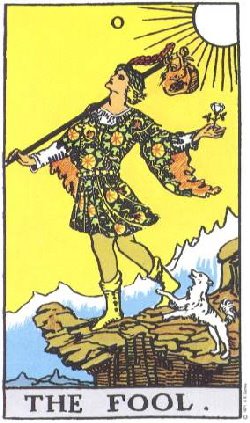
When there is no (belief in a) story, we become a fool.

All there is, is the eternal Present - always new, fresh.

The whole world - all there is - is what is right here. Anything else is a story.

There is no past and no future. They too are just stories happening now.

My only life is right here, that is all there is.

There is an absence of belief in any story, including that of "I".

There is unknowing, yet access to whatever experience, knowledge, information, skills and so on that may happen. And there is a story of how they happen in response to the situation, although that too is just a story.

There is nothing to defend. There is an absence of any identity so no I and Other, and nothing to protect or defend.

I can find everything in me (this human self) that anyone comes up with.

Everything is - what we label rain, cat, table, lamp, body, sensations, thoughts, decisions, movements, focus, awareness and so on - with no I anywhere.

Everything just happens, with no doer anywhere.

In short, this human self - operating in this context - looks very much like a fool to anybody. It is too simple. Too childlike. Although it is a simplicity which includes complexity. Childlikeness which includes maturity. Foolishness which includes wisdom.

Labels: , ,

Network of Beliefs Monday, May 15, 2006 |

Again, by doing BK inquiries, it seems clear that most of us function from a network of beliefs. Some are more basic than others, many of them (all?) support each other, and together they form our identity. They tell us what is I and Other.

The most basic belief is in the idea of "I", creating the filter of I-Other. Then maybe "I am", excluding nonexistence. Then "I am human", placing the I on a temporary object in the world, and scaring ourselves with that story. Then all the other ones, such as "I am white", "I am European", "I am progressive", "I am kind", "I am considerate" and so on, endlessly.

Looking at it, I see that it can be represented in an inverted pyramid with the belief in the idea of "I" at the bottom, as the other beliefs would have problems existing without that one.

And I also see that we don't have to question and examine every single one of them for this network to unravel. The key ones (the ones most charged for us) take large segments of the network with them, and there is also a natural intelligence here which seems to catch onto the general process and spontaneously applies it to new and other beliefs.

Labels: , ,

Stories Before Emotions |

Through the inquiry lens (and other similar ones), it is clear that beliefs come before emotions. Doing the Byron Katie inquiries, I see that over and over.

I have a belief. A situation comes up which does not match that belief. And there is an emotion coming up inviting me to look at that discrepancy. What is the belief that is out of alignment with what is? I see it, examine it, and it falls away.

Labels: , ,

Infinite Causes & Present Thursday, May 11, 2006 |

It is given, even from a conventional view, that the present is all there is. The present is all that is real. Any ideas of past and future are just that, ideas - abstractions, maps.

Believing in (stories about) past and future

But when we believe in our ideas, they seem real so past and future (or rather our stories of past and future) seem real as well. We may know intellectually that the present is all there is, but it certainly does not feel that way.

Realizing selflessness

It is only when we have a glimpse of - or or awaken to - a realization of selflessness that this becomes real and obvious. The belief in ideas fall away, including the belief in the idea of I, so now it is clear that the present is all there is. It is revealed as the Timeless Present, within which time and space unfolds in always new and fresh ways. It is the Present that always is. Ideas and stories about past and future are just ideas and stories, occuring right now along with everything else.

Past

When we go to the past to explain the present, we are going to stories about the past - maps that highlight some features, leave other out, and are inherently quite different from the terrain. It may give a sense of order and understandable patterns, but that is about it. Anything in the present, seen from the perspective of past and future, has infinite causes. Any map will be woefully inadequate in accounting for even a fraction of these.

Past as mirroring the present

What our stories about the past (and future) do, quite accurately, is reflecting the present. Or rather, they are the present - one of the way the world of phenomena unfold in the present.

One way to say this is that they are projections of what is happening right now. They reflect and are what is happening now, but appear to say something about an abstract past or future.

It is pretty obvious, and also quite beautiful. Our stories say something about what is going on right now, and are valuable as that.

Reality?

There is of course a consensus reality, one that we can more or less agree on in terms of our past, individually and collectively. This map of consensus reality help us navigate this world more effectively.

Pointing back to the present

But at the same time, the map of consensus reality is merely an abstraction - really only saying something about us right now. Other stories - dreams, those we label fiction, and so on - are as accurate in saying something about us right now, although they may be less helpful as guidelines for navigating the world.

The realization of infinite causes also brings us back to the present. Any map of the past is woefully inadequate, so the Present is all we really have.

Labels: , , ,

Rushing Back In |

Sometimes when I do inquiry, when there is a big shift in perception, there is also a corresponding energetic shift and also a sense of the whole world rushing back into me.

There is an untying of a knot in consciousness, which seems to be followed by a corresponding untying of an energetic knot.

And the whole world rushing back into me is (as it seems to me) the rushing back of my story of the world. I had it projected out there, and now realize that it is really all about me.

Labels: , ,

Inquiry :: Without Stories Tuesday, May 02, 2006 |

Here's another belief, somewhere there under the surface...

I often notice a difference between my conscious worldview (formed from first and second hand experiences, explorations of ideas, and what I would like to be true) and my beliefs (formed who knows how - probably from experiences with parents, family, subcultures, culture and so on).

For instance, my experience tells me that living without stories is a liberation and allows the inherent clarity, compassion, wisdom, receptivity and effortless effectivity of the mind to unfold. I see this over and over, in smaller and larger ways. Yet, I am also sometimes aware of beliefs in me saying something along the lines of...

Without my stories, something terrible will happen. (I will stay in situations that others see as very destructive and I am blind to.)

  1. Yes.

  2. No (Cannot know that for sure.)

  3. How do I react when I have that belief?

    Fear of what may happen if beliefs go away. Fear of not noticing situations destructive to me, of not acting, of not taking initiative. Fear of becoming complacent, a vegetable.

    What is the worst that can happen if I don't have that belief?

    That I will get stuck in desctructive situations, without any desire to get out of it.

    What do I get from holding onto that belief?

    I get to hold onto beliefs. To not sincerely explore them. To hold back. To feel that I am stuck. To see any talk about allowing beliefs to drop as naive. To be right.

    How do I treat others when I have that belief?

    Impatient when they either contradict my stories, or I sense they want me to drop them. Defensive. Holding back. Pretending to go along, at best.

  4. Who am I without that thought?

    Free to be without stories, if that is what happens. OK with it. Able to enjoy it. Free from a sense of something terrible happening if I allow beliefs to go.

  5. (a) Without my stories, something terrible will not happen. (I will not stay in situations that others see as very destructive and I am blind to.)

    Yes, that is my experience. It frees up clarity, wisdom, compassion, receptivity, ability to engage more freely and appropriately - more from flow, from a sense of intimacy with myself, others, life, existence.

    (b) ...

Labels: ,

›› Note: Moved to new address!

Please go to www.absentofi.org for current posts.

Continue the exploration...

integral & buddhist blogs
blogmandujoe perezintegral options cafeintegral harborken wilberpongsatornthis is this~c4chaos

the work blogs
byron katelet's do the worksoul surgery

websites
a. h. almaasadyashantibig mindbreemaheadlessnessintegral instituteintegral spiritual centerprocess work centerthe workzaadz

websites ii
center for sacred sciencesglobal mindshiftimaginifyintegral wikijoanna macykosmos journalparabolaseti institute the great storytricyclewikipediawikipedia spirituality portalworldchangingyes! magazine

miscellaneous
my starred itemsmy librarymoe at technoratimoe at icerocket

items of interest

Creative Commons License StatCounter - Free Web Tracker and Counter